 The Language of Houses by Pulitzer Prize winning novelist and reigning NYS Author Alison Lurie (who visits us on Thurs. 9/18) is reviewed in the Wall St. Journal:
Le Corbusier may have decreed that the house should be "a machine for living," but Alison Lurie knows architecture carries a far greater moral charge than such minimalist efficiency implies. In "The Language of Houses," she takes us on a whistle-stop tour of the social and psychological significance of private and public structures: schools, churches, government buildings, museums, prisons, hospitals, hotels, restaurants and of course homes. She makes a powerful argument that how we choose to order the space we live and work in reveals far more about us, our place in the world and our preoccupations than we know. Architectural design is both a mirror and molder of human experience.... The Language of
Houses is a mine of adroit observation, uncovering apparently humdrum
details to reveal their unexpected, and occasionally poignant, human meaning.
More in the Wall St. Journal: http://online.wsj.com/articles/book-review-the-language-of-houses-by-alison-lurie-1409345436
More about Lurie's visit: http://www.albany.edu/writers-inst/webpages4/archives/lurie_alison14.html
More on the upcoming Visiting Writers Series: http://www.albany.edu/writers-inst/webpages4/programpages/vws.html
Wednesday, September 10, 2014
Alison Lurie's new book in the Wall St. Journal

Friday, September 5, 2014
Alison Lurie in National Geographic
 Acclaimed novelist Alison Lurie, who opens our Fall 2014 Visiting Writers Series, is interviewed in the August 17 issue of National Geographic:
Acclaimed Novelist Alison Lurie Thinks Buildings Say a Whole Lot About Us
A critic once remarked that Pulitzer Prize-winning novelist Alison Lurie writes so simply that a cat or a dog can understand her. It was meant as a compliment and taken as such. In her new book she turns her lucid gaze on a subject baffling to many of us: architecture.
In this candid interview she talks about what buildings tell us about their owners' aspirations and politics, why she built houses for fairies as a child, how she feels about being compared to Balzac and Jane Austen, and what her own home in upstate New York reveals about her.
More in National Geographic: http://news.nationalgeographic.com/news/2014/08/140817-alison-lurie-architecture-cornell-spoils-of-poynton-great-expectations-booktalk/
More about Alison Lurie's events in Albany: http://www.albany.edu/writers-inst/webpages4/archives/lurie_alison14.html
More about the Fall 2014 Visiting Writers Series: http://www.albany.edu/writers-inst/webpages4/programpages/vws.html#lurie Read More......
Monday, December 9, 2013
Michael Kammen, Historian of the American Psyche, Dies
 Michael Kammen, Pulitzer Prize-winning cultural historian who visited the Writers Institute in 2007, has died.
From the New York Times obituary:
Michael Kammen, a Pulitzer Prize-winning historian whose scholarly aim was no less than the illumination of the collective American psyche, died on Nov. 29 in Ithaca, N.Y. He was 77.
Professor Kammen (pronounced KAY-man) received the 1973 Pulitzer for history for People of Paradox: An Inquiry Concerning the Origins of American Civilization, published the previous year. That book sought to describe the national character from the country’s earliest days to the 20th century.
More in the Times: http://www.nytimes.com/2013/12/07/us/michael-kammen-historian-of-us-psyche-dies-at-77.html
More about Kammen's visit to UAlbany to discuss his book, Visual Shock: A History of Art Controversies in American Culture (2006): http://www.albany.edu/writers-inst/webpages4/archives/kammen_michael.html
Friday, August 16, 2013
The Lyrical Violence of J. G. Ballard at RPI
 EMPAC at Rensselaer (RPI) will present "Ballard," a theatre piece inspired by the work of innovative English writer J. G. Ballard (1930-2009), author of Crash, Empire of the Sun and a variety of dystopian and apocalyptic works of fiction.
Ballard
Kris Verdonck
A Two Dogs Company
September 7, 2013, 7PMAfter spending three weeks in residence, Belgian theater maker and visual artist Kris Verdonck invites the audience to an open studio and lecture demonstration of his innovative stereoscopic (3D) filming techniques developed with the EMPAC team. The presentation will provide insight into the microcosmic sets built on the theater stage, and a behind-the-scenes look at the development process.
BALLARD inhabits the world and characters from the apocalyptic science-fiction novels of J.G. Ballard, whose visionary descriptions of a future world resemble today’s neoliberal society more and more.
Verdonck’s visual arts, architecture, and theater training is reflected in the work he produces: his creations are situated in the transit zone between visual arts and theater, installation and performance, and dance and architecture.
Reservations are recommended and can be made in person at the box office or over the phone at 518.276.3921. Read More......
Wednesday, July 10, 2013
Poet Jorie Graham: Imagining the Unimaginable
 Pulitzer-winning poet Jorie Graham, who presents a free reading tomorrow in Saratoga Springs, talks to an interviewer about the purpose of art:
"And what is art for then? What is dreaming for? What is the imagination supposed
to do with its capacity to 'imagine' the end? Is the imagination of the
unimaginable possible, and, perhaps, as I have come to believe, might it be one
of the most central roles the human gift of imagination is being called upon to
enact? Perhaps if we use it to summon the imagination of where we are
headed— what that will feel like— what it will feel like to look back at this
juncture— maybe we will wake up in time?"
Read more of Deidre Wengen's Phillyburbs.com interview on the Poets.org website: http://www.poets.org/viewmedia.php/prmMID/20176
Full schedule of free readings: http://www.albany.edu/writers-inst/webpages4/archives/sumread.html
Friday, July 5, 2013
Phillip Lopate on the Art of the Essay
 Major American essayist Phillip Lopate, who presents a free reading in Saratoga on Monday 7/8, has published two new books in 2013-- the collection, Portrait Inside My Head: Essays, and the writer's guide, To Show and to Tell: The Craft of Literary Nonfiction.
Morris Dickstein reviewed both in the New York Times in March:
"His gods are Montaigne, the father of the essay, whose field of research was his own mind, and William Hazlitt, who, besides being an incomparable literary critic, sketched vehement novelistic impressions of what no one else thought worth noticing, from boxing matches and Indian jugglers to 'the pleasure of hating.'"
More: http://www.nytimes.com/2013/03/03/books/review/essays-and-a-writers-guide-by-phillip-lopate.html?pagewanted=all&_r=0
Complete schedule of free readings: http://www.albany.edu/writers-inst/webpages4/archives/sumread.html
Wednesday, October 31, 2012
NPR Interview with Joy Harjo
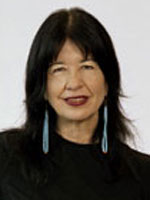
"I [had] felt like I had lost my voice, too. And sometimes, to find it ... what I've learned is it needs to be lost for a while. And when it wants to be found, you'll find it.
"But I would say is that you just put yourself in the place of poetry. You just go where poetry is, whether it's in your heart or your mind or in books or in places where there's live poetry or recordings.
"And, you know, it's like looking for love. You can't look for love, or it will run away from you. But, you know, don't look for it. Don't look for it. Just go where it is and appreciate it, and, you know, it will find you."
Read more or listen to the interview: http://www.npr.org/2012/07/09/156501436/joy-harjos-crazy-brave-path-to-finding-her-voice
Harjo visits UAlbany tomorrow, 4:15 and 8pm, Campus Center 375, with a catered reception by SUNY Press to follow the evening event. Read More......
Monday, March 26, 2012
Not a Greatest Hits Package-- Bob Nickas

“I did not put the book together in the way a band might assemble a greatest hits package.” Instead, it’s an “idiosyncratic” collection that includes lesser-known artists, such as the now-defunct duo Wallace & Donohue, rather than, say, Jeff Koons.
Picture: "Changing My Tune" by Wallace & Donohue, 1980s.
Friday, March 23, 2012
Dissing the Patrons of Art-- Bob Nickas 3/26
 Bob Nickas, art critic who visits 3/26, has no problem biting the hand that feeds Art:
Wealthy and powerful people—and boring people, and famous people—use art and artists to legitimize themselves. Or they use culture to say, “Look how cultured I am. I gave all that money to the museum.” Or, “Look, I bought this painting for however many millions of dollars at that auction.” People in the art world, people around artists, they all do the same thing. They use art to advance themselves, to advance their careers, for fame, power, money, and all those things. The art world doesn’t function any differently from the business world, the banking world, the real estate world, the military, or politics. And all those people in banking and real estate? They’re all involved in art. And why are they involved in art? Because in banking and real estate, there are all these oversights. People can go to jail. People can pay fines. The art world is the only unregulated market of its kind. I mean, what are the other unregulated markets? Drugs, arms, and slavery? Prostitution and gambling? Art is the only white-collar, legitimized market that is completely unregulated. There are no penalties. The only thing that you’ll ever get caught for is tax evasion.
Read the interview with Jesse Pearson in Vice.
Monday, March 19, 2012
"Any Similarity is Coincidental"
 "This is an artwork by Richard Prince. Any similarity to a book is coincidental and not intended by the artist."
Copyright-wronging contemporary artist Richard Prince features the above disclaimer on his controversial "sculpture," a precise facsimile edition of J. D. Salinger's The Catcher in the Rye, with the attribution, "a novel by Richard Prince."
Bob Nickas, art critic and curator who visits on Monday, March 26th, writes about Prince and Salinger, their respective works of art and their various legal battles, in Vice.
Friday, March 16, 2012
See the Abstract Show Before Visit With Bob Nickas
 You may wish to visit "Material Occupation," the UAlbany Art Museum's current exhibit on contemporary abstract art, in advance of a Bob Nickas's visit on Monday, March 26th.
The contrarian art critic and curator is widely regarded as America's leading authority on recent abstract art. He is also the author of the highly praised 2009 book, Painting Abstraction.
The reviewer for the San Francisco Chronicle called it, "a wild ride of a reference book.” The New York Times called it, “a lively survey… a useful tool in forming a sharper, broader sense of what is going on in the world of abstract painting.”
"Material Occupation" runs through April 7, 2012.
"The artists represented in Material Occupation challenge the idea that abstraction is a rarified concept that bears little relation to everyday experience. Using familiar patterns, structures, designs, and systems, these artists explore the cultural associations inherent in prosaic materials. Traditional art-making gestures are replaced by actions equated with manual labor, such as staining, pasting, bleaching, mending, stretching, taping, daubing, recycling, and tearing. Drawing on a wide range of materials and references, these artists apply a keen eye and a steady hand as they transform house paint, thread, old and newly woven fabric, industrial tape, and other ordinary materials into poetic abstract forms. The decorative, the contemplative, and the marginalized thus take precedence in work that proposes an alternative relationship to Modernist abstraction." More.
Tuesday, March 6, 2012
What is Theft? What is Art? What is Theft of Art?
 "Is there anything worse than being sued? How about being sued and losing. No, even worse than that. What about never having the chance to sue someone? Exactly. Because the way it used to be, the worst that could happen was that someone took your work away from you, and then profited at your expense. Nowadays, if your career could use a real boost, you can't ask for a more golden opportunity than the chance to take someone to court."
Bob Nickas, art critic and curator who visits Monday 3/26, talks on Vice.com about the lawsuit of French photographer Peter Cariou against artist Richard Prince, which the New York Times has called "one of the most closely watched copyright cases ever to rattle the world of fine art."
Nickas writes a regular column for Vice: "KOMP-LAINT DEPT." Read more.
Photo: Prince's collage "Inquisition" which appropriates and alters Cariou's photographs of Rastafarians.
Friday, March 2, 2012
Writing About Abstract Painting
 Art critic and curator Bob Nickas, who visits on March 26, talks about the meaning of contemporary abstract painting in Art in America:
PENN: What is it about abstract painting that compels you to write about it today?
NICKAS: Ad Reinhardt once said that it's more difficult to write about abstract painting than any other kind of painting because it's content is not in its subject matter but in the actual painting activity. I agree, but you have to keep in mind that he wrote this in 1943. Abstract painting today often has a subject beyond itself. When Wayne Gonzales makes a painting that, seen up close, is a proliferation of overlaid gray dots and ovals, but from a distance coheres as an aerial view of the Pentagon, he offers an image of power and the war. When Steven Parrino mis-stretches a large expanse of metallic silver canvas and titles it Death in America, he's not simply offering the world another shiny monochrome. This is a work that reminds us of abstraction's privileged relation to language. The very same painting, given a neutral title, or untitled, is simply not the same painting. Reinhardt's text posits abstraction against illustration. To my mind, there is absolutely nothing compelling about illustration. We all make our choices.
Read the 2009 interview in Art in America magazine.
Wednesday, February 22, 2012
Raising Renee Premieres Tonight on HBO 2/22/2012
 If you missed our screening of Raising Renee back in October 2011 (and the talkback with Oscar-nominated filmmakers Steve Ascher and Jeanne Jordan), you can still catch the premiere on HBO 2 tonight at 8PM.
The story of acclaimed artist Beverly McIver and her promise to take her sister Renee (who is mentally disabled) when their mother dies — a promise that comes due just as Beverly's career is taking off.
"In a notable fusion of subject and film, the same themes that fuel the artist’s distinguished body of work—race, class, family, disability—propel this cinematic portrait. Both are a testament to the transformative power of art. " -- Full Frame
More.
Tuesday, January 31, 2012
Art in Science
 Theoretical physicist Alan Lightman speaks about the importance of art in science on MIT TechTV.
Lightman, who visits this coming Thursday, was born in Memphis Tennessee in 1948, son of Richard Lightman, a movie theater owner, and Jeanne Garretson, a dancing teacher and volunteer Braille typist. From an early age, he was entranced by both science and the arts and, while in high school, began independent science projects and writing poetry.... More.
Thursday, December 8, 2011
Comedy and Performance Art
 Ken Johnson, who visited on November 7, interrogates the term "performance art" with regard to comedy in a piece that appeared last month in the New York Times.
"Comedy must at least be funny, and if it is not, it fails. Must comic performance art be funny? Can it be called art if it aims primarily for laughs? A lot of nonperformance art these days is humorous. Maurizio Cattelan’s work often is, and his retrospective at the Guggenheim, in which almost everything he’s done as an artist is suspended high above the rotunda floor, might be seen as a big joke." More.
Books as Art Objects
 The New York Times has an article about how, in an age of e-books, publishers are attempting to sell physical books as giftable, displayable art objects, much as they were a century ago.
"If e-books are about ease and expedience, the publishers reason, then print books need to be about physical beauty and the pleasures of owning, not just reading." More.
The article also makes mention of the "deep red endpapers" of Dava Sobel's new book on Copernicus, A More Perfect Heaven.